Following a wave of industry discussion around retail media growth, measurement and effectiveness, Reign’s Head of Planning Adam Smith looks at a question that’s rarely asked: what are brands giving up in order to fund it?
Retail media has become one of the UK’s fastest-growing advertising channels. The appeal is obvious. Brands can use retailer first-party data to identify potential buyers, target them with greater precision and, in many cases, directly connect media exposure to sales outcomes. At a time when marketing budgets remain under pressure, that level of accountability is understandably attractive.
But perhaps we’re asking the wrong question. Instead of asking whether retail media works, marketers should be asking:
What is retail media replacing?
Because budgets are not infinite. Most organisations aren’t discovering new pots of money. They’re moving investment from one area to another.
We live in the most crowded attention economy in history
The challenge facing marketers today isn’t a lack of advertising opportunities. It’s the opposite.
UK adults scroll on social media for 12km each month…that’s 3 marathons per year. Meanwhile, Out of Home continues to expand. The channel generated a record £1.44 billion in revenue in 2025, with digital formats now accounting for around two-thirds of all OOH investment. With a rapid rise of instore advertising opportunities, that panel number is increasing on a weekly basis.
Every day consumers scroll, swipe, stream, search and pass thousands of commercial messages. People are not short of things to look at. They’re short of things worth remembering.
And that distinction is becoming increasingly important as marketers pay growing premiums for increasingly precise audiences.
Retail media and the industry’s obsession with efficiency
Retail media sits at the centre of a broader shift in marketing thinking. For years, the industry has become increasingly focused on optimisation, targeting and short-term performance metrics. Even the IPA’s latest effectiveness work warns that marketers have become overly focused on efficiency and precision at the expense of scale, reach and long-term brand growth. In their recent Go Big or Go Home research, Les Binet argues that the industry has started “thinking too small”.
This creates an uncomfortable question.
If you’re selling a niche B2B software platform, a specialist healthcare product, or a luxury purchase with a clearly defined audience, paying more to reach exactly the right people may be entirely justified.
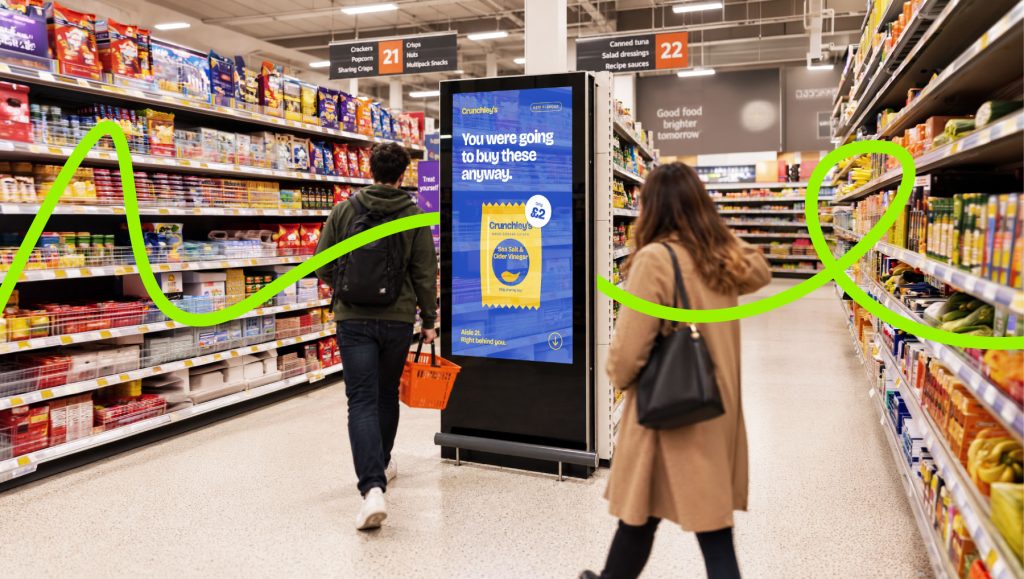
But if you’re selling a £2 packet of crisps, a loaf of bread, a ready meal or a premium lager, does paying double the CPM to reach a smaller audience actually create more growth? Or are you simply becoming more efficient at reaching people who were likely to buy anyway?
Growth comes from more buyers, not just better targeting
This is where much of the evidence from marketing effectiveness starts to align. Whether it’s the work of Les Binet, Peter Field, Byron Sharp or more recent research from Andrew Tindall and System1, the recurring theme is remarkably consistent: brands tend to grow when they reach more category buyers, not when they become endlessly better at targeting existing ones.
Look at some of the UK’s standout challenger brands over the last decade:
Brands such as Jason’s Sourdough, MOTH and Jubel haven’t built momentum simply by identifying clever audience segments. They’ve built growth through distinctiveness, fame, availability, and relevance.
Put simply, more people now know who they are. And brand awareness for a quality product is going to naturally drive brand favourability.
Being known isn’t the same as being known for something
There’s another challenge hidden within the retail media conversation. A lot of retail media inventory sits within relatively low-attention environments: retail websites, digital displays, paid social feeds, and programmatic placements.
These channels can be extremely effective reminders. They can support conversion. They can reinforce existing memory structures. But there is a significant difference between being known and being known for something.
Brand growth depends on mental availability: the likelihood that a brand comes to mind in a buying situation. Building that requires more than data. It requires memorable creative, consistency, and broad reach delivered over time. Research from the IPA and System1 continues to show that creativity, consistency and emotional engagement remain critical drivers of long-term effectiveness.
The real question for marketers
None of this is an argument against retail media, far from it. Retail media can be incredibly effective when it plays a clearly defined role within a wider communications strategy. The danger comes when efficiency becomes the strategy.
The brands that will win over the next decade are unlikely to be those with the most retailer data or the most precisely targeted audiences. They’ll be the brands that understand how to balance broad reach with precision, balance long-term brand building with short-term activation, and balance future demand with today’s sales.
Because the real question isn’t whether retail media works.
It’s whether we’re investing enough in the activities that create tomorrow’s buyers and not just the activities that convert today’s ones.